Discover Wuyuan

Joyce

This Scaly-Sided Merganser Visits Wuyuan This Time of The Year


This time of the year, from mid December to early April, about 40 Scaly-sided  Mergansers can be spotted enjoying the water in a village 10 kilometers away from Wuyuan town center. 

The Scaly-sided Merganser, also known as the Chinese Merganser, is a rare and endangered duck species found in East Asia. This migratory bird breeds in the north, during the winter, it migrates to areas in the south. With a mild winter and plenty of small fish in the river, some of these fascinating birds are happily spending their colder months in Wuyuan.

The adult males and females are very distinctive in their appearances. Males have striking plumage, with a black head that shines green in the light, a white body with black streaks, and a prominent scaly pattern on their flanks, which gives them their name. Females are more subdued, with a gray body, reddish-brown head, and a less conspicuous crest. Both males and females have thin and serrated bills, adapted for catching fish.

Two Days in Jingdezhen – Porcelain Capital of China

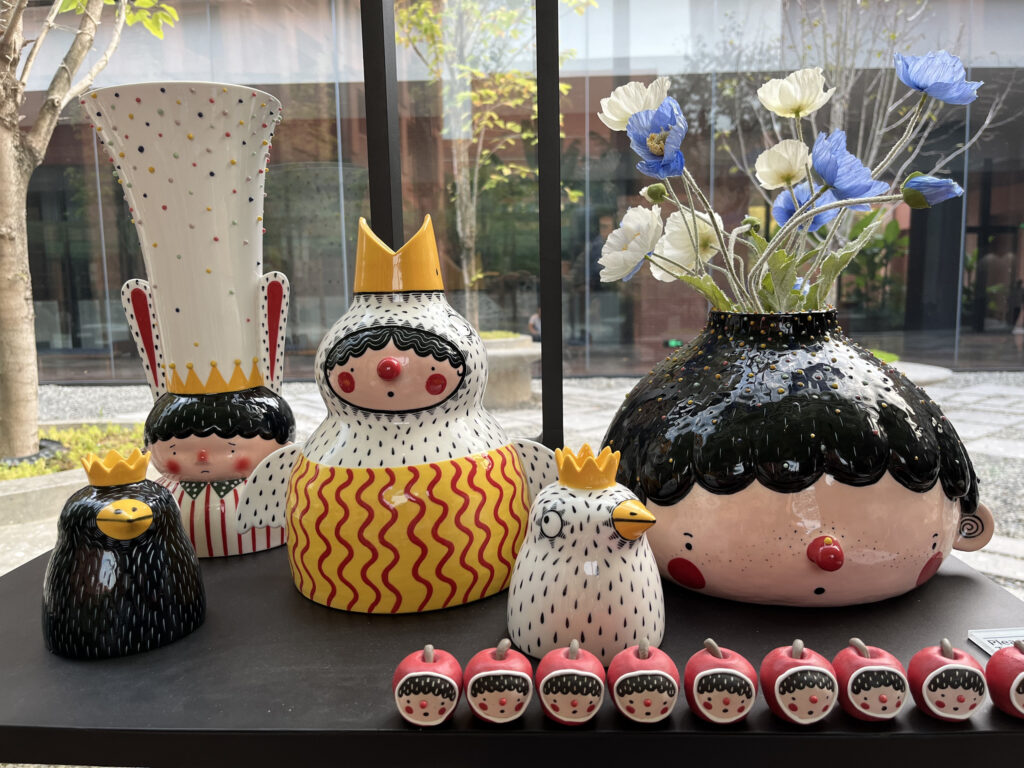
If porcelain is your thing, then Jingdezhen is an absolute must-visit on your bucket list in China. Jingdezhen, often referred to as the “Porcelain Capital” of China, is renowned for its long-standing tradition of porcelain production. Located in Jiangxi Province, this city has been a center of Chinese porcelain craftsmanship for over a century, its famous blue-and-white porcelain has been highly prized both domestically and internationally. Recent years, Jingdezhen has hosted numerous pottery workshops, museums, and galleries, all of which add a modern and artistic vibe to this city. With yummy local street food and interesting ceramic arts and crafts shopping markets, Jingdezhen is fast becoming the cool place to visit in China. Below we introduce a 2-day itinerary according to our personal experience and we hope it will help you with your trip to Jingdezhen.

If you have time to spare, you can extend your trip to three days in Jingdezhen by visiting Yaoli Ancient Town on the third day. But if you have just visited Wuyuan ( people tend to visit Wuyuan and Jingdezhen together), then you can skip Yaoli Ancient Town, as many villages in Wuyuan are similar in architecture and culture to Yaoli Ancient Town. 

Day 1:

  • Jingdezhen China Ceramic Museum: this is an excellent place to understand the development history of Jingdezhen and China’s porcelain production history and culture. Entrance is free, but you need to reserve tickets online in advance, especially on weekends or holidays. The museum has some tickets released every hour on the day, you can try your luck at the door if you can’t find any tickets online. Museum is open from 9:00-17:00, closed on Mondays. 
  • Taoxichuan Art District: the old Universal Porcelain Factory building has now become a cultural and creative district full of artistic atmosphere. Here, you can admire various ceramic works of art and experience the perfect combination of craftsmanship and modern creativity. Visit at night for a different vibe!

Day 2:

  • Sanbao International Ceramic Art Village:  Once an important source of raw materials for Jingdezhen’s ancient porcelain industry, it is now home to many talented artists (some from overseas) who come here to pursue their ceramic dreams and passions. Sanbao Village has only one main street that stretches for several kilometers. Walking along the street, you can see many art venues, such as art galleries, museums, ceramic workshops, branded porcelain stores, etc. each has its own artistic style. There are also cafes, teahouses, specialty restaurants, and guest houses along the way for a nice break or an overnight stay. There are hiking routes deep in the village with a beautiful natural environment. There is also a restaurant called Sanbao Bieyuan, which is very unique. Have lunch here!
  • Ancient Kiln Folklore Expo Area (also known as Taoyangli Historical and Cultural Tourism Area, entrance fee: 53 CNY/RMB ): this is the site of the Royal Kiln Factory, the Royal Kiln Museum, and the old alleys. Once you are inside, we recommend visiting the Royal Kiln Museum first. In our opinion, the museum is the highlight of the area. Here, you can witness with your own eyes the ancient kilns from the Song Dynasty to the Qing Dynasty and feel the long history of porcelain making skills. The Royal Kiln Museum is open from 9:00-22:00, but closed on Mondays. Entrance to the museum itself is free, but you do need to reserve the tickets online to get in. This area integrates ceramic experience, local culture, entertainment and leisure. It is the only national tourist attraction in the country with the theme of ceramic culture. This area is huge, expect to spend 3-5 hours here. 
  • Treasure hunt at Taoyang New Village Night Market for ceramic gifts: brightly lit and lively, this night market has all sorts of ceramic goods imaginable, rich in design and friendly in price, this is the place to shop for inexpensive gifts. Price negotiable! Best time to visit: 7pm-10pm. Bus #27 takes you directly to the market entrance.

Day 3:

Yaoli Ancient Town: located northeast of Jingdezhen, this town was the birthplace of Jingdezhen ceramics. Here you can find the quiet remains of many old Huizhou style buildings and feel the impact of the original local ceramics industry. Featuring its ancient architecture and beautiful scenery full of forests and waterfalls, this area is the perfect place to relax in Jingdezhen.

Food & Drink:

  • Fuzhou Street Foods
  • Relax and enjoy your coffee while admiring the unique chinaware and porcelain display in a cafe
  • Try Jingdezhen special snack: fried dough with sticky rice inside
  • Local specialty tea: Fuliang red tea, buy it as a gift

Hotel:

Hyatt Place Jingdezhen Taoxichuan: beautifully designed hotel, across the street from Taoxichuan Art District, delicious breakfast with local specialty food, central location to major attractions in Jingdezhen, strongly recommended.

Bus Schedules to Huangling Village from Wuyuan Train Station

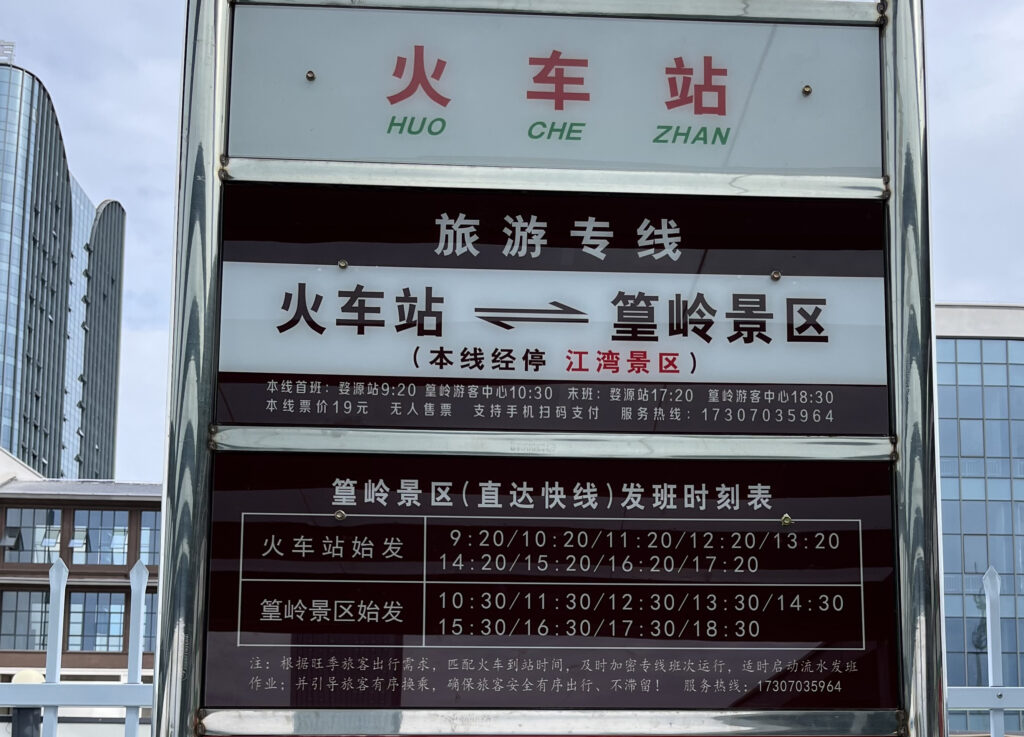
There is a Bus Station next to Wuyuan Train Station. When you get off the train, just follow the sign, you don’t need to exit the train station, an escalator will bring you to the ground level of the bus station. There are express buses that you can take to Huangling Village (final stop) directly. These buses also stop at Jiangwan Village, another popular attraction in Wuyuan.

The buses to Huangling run every hour, the first departing bus is 9:20 and the last departing bus is 17:20, the schedules are largely corresponding to the arriving train schedules. Bus fee: 19 CNY/RMB, payment method: phone app like Alipay/Wechat Pay or cash ( exact amount, no change)

Please note: bus schedules might adjust occasionally during holidays and high season with a short notice, if in doubt, please call hotline: 17307035964

Bus Schedules to Huangling Village from Wuyuan Train Station: 9:20/10:20/11:20/12:20/13:20/14:20/15:20/16:20/17:20

Bus Schedules to Wuyuan Train Station from Huangling Village: 10:30/11:30/12:30/13:30/14:30/15:30/16:30/17:30/18:30

Bukchon Hanok Village, South Korea

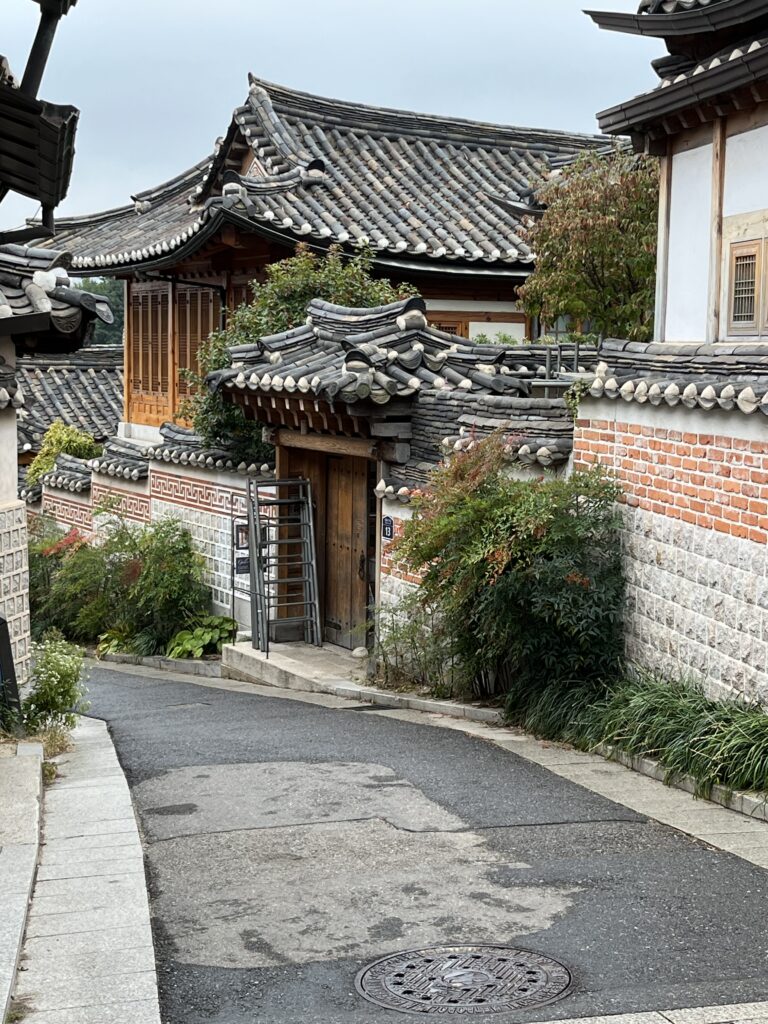
Bukchon Hanok Village is a historic neighborhood located in Seoul, South Korea. The village has been inhabited for centuries, and its traditional houses date back to the Joseon Dynasty (1392-1910). The area was historically a residential neighborhood for Seoul’s aristocracy and scholars, even today it still remains a residential area where people live and work. Bukchon village is renowned for its well-preserved traditional Korean houses, known as Hanoks, which offer a glimpse into the country’s architectural and cultural heritage. Walking through the narrow streets of Bukchon provides a contrast to the surrounding modern Seoul cityscapes.

Highlight of the trip: Have a break at the Bukchon Observatory and Tea House with the most scenic rooftop terrace. After you get lost strolling through the narrow streets, the crowds, and have had many memorable photos and selfies, this Tea House is the oasis you would much need. With a cup of traditional Korean tea in hand(hot or cold, many options, some flavours you may have never tasted before), head straight to the rooftop terrace. What a view – The Hanok village rooftops with Seoul cityscapes in the far background. At that moment, you would be amazed by the sight that a traditional village like Bukchon and a modern city like Seoul can coexist so naturally and so harmoniously, just beautiful!

How to get there: If you stay in an Insadong area hotel, you can walk to Bukchon Village, or subway to Anguk station and walk. I downloaded a  Korean app called NAVER (English version) for walking since Google Maps’s Walk function doesn’t work in Korea.

Where to stay: Amid Hotel Seoul. This hotel is within walking distance to Bukchon Village and minutes away from subways. I like that the hotel has a nice bakery/cafe in the lobby and a police station across the street(a plus for solo female travellers, also I have never seen a police station building that is so nice and modern).

Hallstatt Austria

Hallstatt Austria – A Day Trip from Salzburg

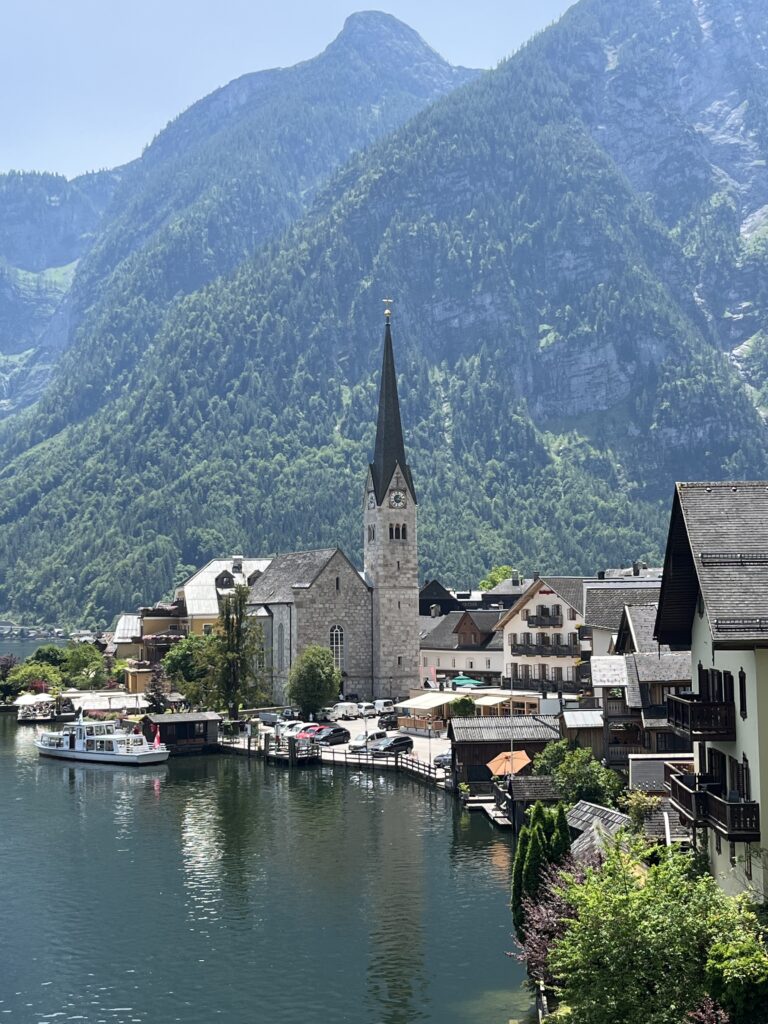
Hallstatt is a picturesque village nestled in the Austrian Alps, known for its stunning natural beauty and rich history. Located in the Salzkammergut region, Hallstatt is famous for its charming wooden houses, breathtaking mountain scenery, and its serene Hallstätter See (Lake Hallstatt). Hallstatt has been on my bucket list for a long time and finally my husband and I made the trip this year.

Highlight of the trip: Brunch by Lake Hallstatt is the mos t memorable part of the trip. We reached Hallstatt by 10am, beating most of the crowds. We found a wonderful restaurant called Braugasthof, they have lovely patio tables by the lake. Surrounded by the beautiful summer flowers, under the warm blue sky, watching sailing boats coming and going, white swans leisurely gliding on the serene lake, eating delicious dish Goulash and drinking local beer, it was just a perfect day! Oh, we also found the spot where the postcard photos of Hallstatt are taken. I used to think the iconic image of Hallstatt in those photos isn’t real, but in reality, it is as stunningly beautiful as the photos, if not more. I also took some photos myself, they look just like those postcards, mission accomplished!

How to get there: Bus 150 + train + boat to Hallstatt from Salzburg. The route may not be the most straightforward, but it is the most scenic one. Bus 150 to Bad Ischl, then you change to train to Hallstatt Station (your bus ticket also covers this). After you get off the train, a waiting ferry (we paid 7€ for the return ticket, cash) will take you across the lake. If you purchase a day ticket and have enough time, you can stop off at either Bad Ischl, Gosaul, or St Gilgen, a lovely way to experience the beauty of the Austrian countryside.

Tips: if you want to guarantee a seat on the bus, get on a bus at the Salzburg main bus station ( starting point). We got on at Mirabell Square ( the second stop), and the bus was almost full. 
 

Where to stay: Hotel am Mirabellplatz. This is our first time in Salzburg, so we want to base in the city and take a day trip to Hallstatt. I think we made the right decision. The hotel is across the Mirabell Palace & Garden, it was nice to have a stroll in the garden after the dinner. You can also catch a concert inside the magnificent Palace.

Scroll to Top