Discover Wuyuan

Self Guided Tours

Qi’ao Village, Zhuhai, China

Qi'ao Village, Zhuhai, China

Qi’ao Village is located on Qi’ao Island in Guangdong province of China, it is the main village on the island. Qi’ao Island is a tourist destination rich in natural scenery and cultural heritage, suitable for cultural tourism, family trips, and eco-tours.

Qi’ao Village was established in the Southern Song Dynasty (1244), and the village is affiliated with Tangjia Town, Xiangzhou District, Zhuhai City of Guangdong Province, with its earliest residents mainly migrating from Fujian and Taiwan. Qi’ao Village itself is a traditional settlement renowned for its distinct Lingnan water town charm, featuring well-preserved ancient architecture and rich folk cultural resources. In 2015, Qi’ao Village was designated as a traditional village in Guangdong Province. 

Highlights of Qi’ao Village (Qi’ao Island):

  • Qi’ao Mangrove Nature Reserve:
    Qi’ao Mangrove Nature Reserve is a type of coastal wetland & protected mangrove ecosystem, it contains approximately 2–3 square kilometers of tidal flats, channels, and mangrove forest. Mangroves are not a single species but a special plant community adapted to high salinity, low oxygen, and tidal conditions. They breathe through aerial roots and reproduce viviparously, allowing their seedlings to mature on the parent plant before taking root. This unique survival strategy enables mangroves to serve as an ecological bridge between the ocean and the land, earning them the title of “Coastal Guardians.” On this wetland, more than 150 species of birds, dozens of fish species, and various crustaceans thrive. The period from October to March of the following year is the prime time for bird watching on Qi’ao Island.
  • Mr. Su Zhaozheng’s Former Residence Exhibition Hall:
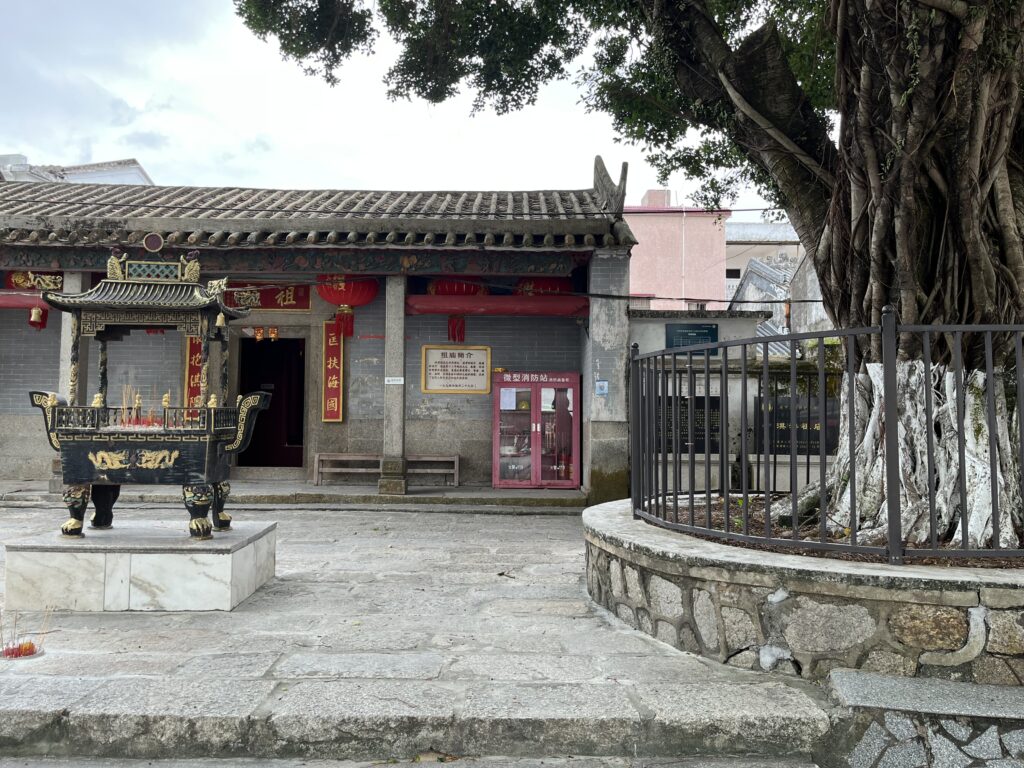
    Su Zhaozheng (1885–1929) was a prominent early Chinese labor movement leader and revolutionary figure. He was born on Qi’ao Island, and is one of the island’s most historically important figures.The exhibition hall is housed in a quaint traditional residence within the village, blending architectural styles of Cantonese and Hakka influences. With its blue bricks, dark tiles, carved beams, and painted rafters, it showcases the unique charm of Lingnan’s traditional dwellings. The interior of the exhibition hall features a diverse collection, including a wealth of historical photographs, physical artifacts, documentary manuscripts, and multimedia displays. These elements comprehensively recreate the life and revolutionary journey of Mr. Su Zhaozheng.
  • Baishi Street:
    Baishi Street, located on Qi’ao Island, is a granite-paved street approximately 2 kilometers long. It was constructed in 1833 using 3,000 taels of silver paid as compensation by British colonists after their military defeat. The street retains the original charm of a fishing village, with bluestone pavements complementing residential buildings featuring blue doors and green walls. Wall decorations include elements such as graffiti art and wood-carved inscriptions. Along the street, visitors can find creative businesses like handicraft shops and cafes.
    As an open-access attraction, Baishi Street is free to the public all day, with a recommended visit duration of about one hour. Nearby ecological tourism resources include the Mangrove Nature Reserve and Lingge Park.

When to visit: The best time to visit Qi’ao Island is from October to December for pleasant temperatures: 20–27°C; low humidity and less rainfall; clear skies — perfect for biking, hiking, and visiting historical villages and not too crowded compared to summer. For bird lovers, this is also the best time for bird-watching.

How to get there: 

  • By train: Zhuhai is well connected by trains. Get off at Tangjiawan Train Station of Zhuhai, then take taxi or DiDi, it’s about 20–35 minutes depending on traffic, cost around ¥35–¥60 and you’ll be dropped directly at Qi’ao Village, which sits near the island’s central area and attractions.
  • By bus: Bus Route 86, runs from Tangjiawan → Qi’ao Village, bus fare: ¥1–¥3, but expect around 30 minutes of wait time.

Where to stay: Qi’ao Island is easily a one-day trip from Zhuhai, and can be a weekend trip from cities like Guangzhou, Shenzhen and Hongkong. There are a few places to stay on Qi’ao Island. Because it’s still fairly rural and low-key, most accommodations are small guesthouses or homestays rather than big hotels. Check here for accommodations.

Guide to Jiangling Scenic Area with Tour Map ( High Season)

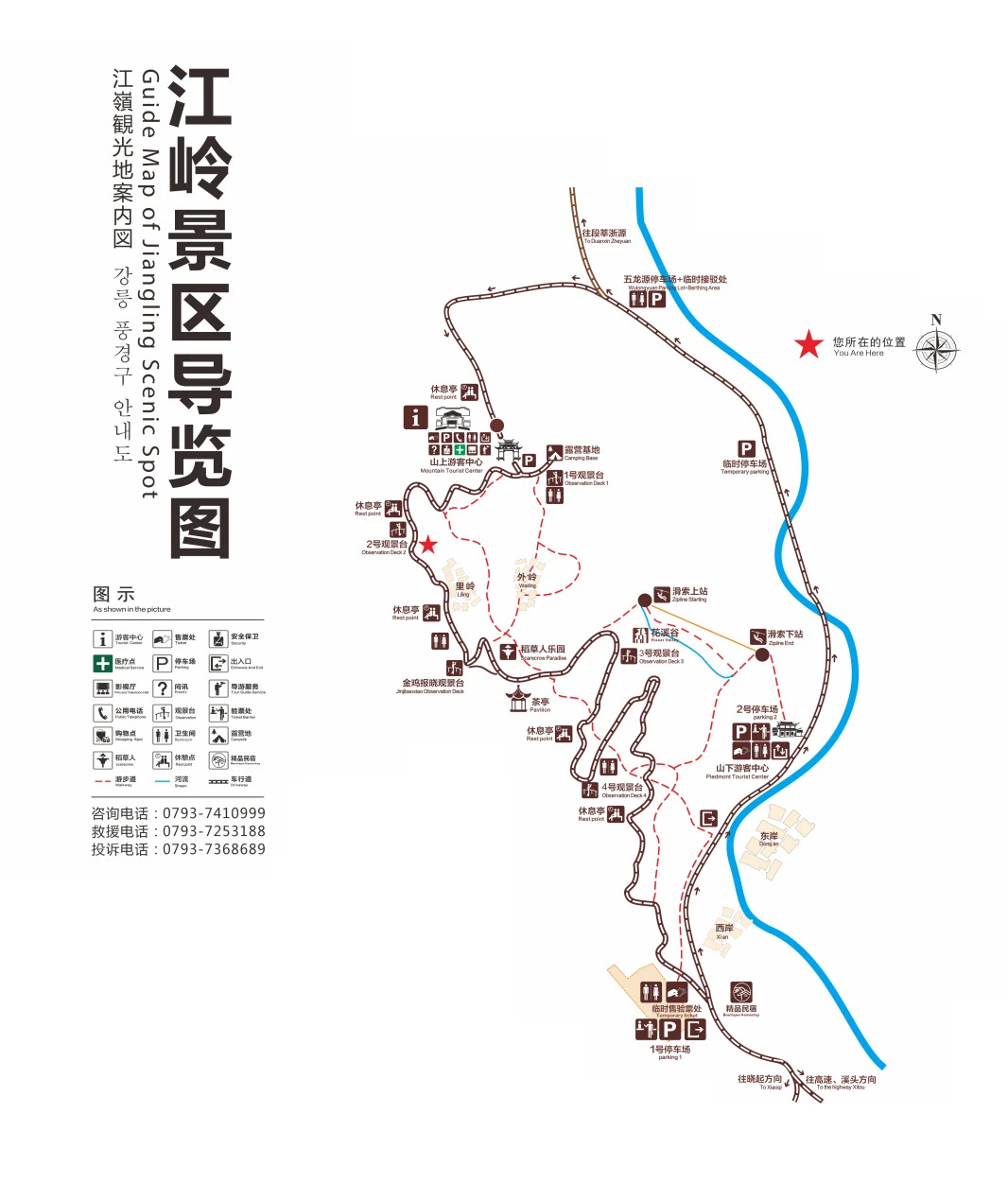
Wuyuan is the most beautiful countryside in China, but in Spring, the most beautiful countryside in Wuyuan is Jiangling. Jiangling Scenic Area is located in the northeast of Wuyuan County, 45 kilometers away from the county center, with a total area of ​​38 square kilometers. When spring comes, you will be surrounded by thousands of acres of terraced flower fields in Jiangling. The full bloom of golden canola flowers in contrast with the distant mountains, nearby water, white walls and black tiles of the village houses becomes a stunning scene that attracts thousands of visitors every year. Here we would like to show you our recommended tour routes with the official tour map to give you a better experience when you visit.

How to buy entrance ticket:

  • Online: if you want to save time and avoid the lineup at the ticket office, buy tickets online. Tickets are available on trip.com and other Chinese websites.
  • On site: there are two ticket offices in Jiangling Scenic Area, one is at the foot of the mountain, another is on top of the mountain, depending on which entrance you enter.

Tour Routes: there are two tourist centers in Jiangling Scenic Area, one is at the foot of the mountain, another is on top of the mountain, depending on which entrance you enter. In general, starting a tour at the mountain top tourist center would be easier, you walk down instead of climbing up, just make sure you get to be dropped off at the mountain top tourist center if you take a taxi or DD car.

  • Tour route 1 ( starting at the Mountain Tourist Center): Mountain Tourist Center — Observation Deck 1 — Liling/Wailing — Jinjibaoxiao Observation Deck — Scarecrow Paradise — Zipline Starting Point — Huaxi Valley — Piedmont Tourist Center. Duration: around 40 minutes
  • Tour route 2 ( starting at the Mountain Tourist Center): Mountain Tourist Center — Observation Deck 1 — Liling/Wailing — Scarecrow Paradise — Jinjibaoxiao Observation Deck — Observation Deck 4 — Dong an — Xi an exit– Parking 1. Duration: around an hour.
  • Tour route 3 ( starting at the Piedmont Tourist Center): Piedmont Tourist Center — Huaxi Valley –Observation Deck 4 — Scarecrow Paradise — Liling/Wailing — Observation Deck 1, then get back to Piedmont Tourist Center from the original route or get back to Piedmont Tourist Center choosing route 1. Duration: around one hour and forty minutes to two hours.

If You Only Have Half A Day in Wuyuan

If you only have half a day in Wuyuan, where would you go to visit? The short answer is Huangling, one of the best villages around the world.

Huangling is the highlight of Wuyuan tourism. It is the most beautiful rural scenery integrating Hui-style architecture, ancient trees, terraced fields, sea of ​​flowers, autumn color, folk customs and more. Visiting Huangling is not affected by the seasons. In spring, a sea of ​​yellow canola flowers covers the terraced fields; in summer, the trees and the waterfalls at the nearby Huangling Shimen Gorge will let you stay cool all day long; in autumn, you will enjoy the autumn color and the famous “Dry Crops In Autumn” scenes; and you will likely to witness the most folk customs in winter, like Nuo dance, Hui opera, traditional parades, especially around the Chinese New. Any time you visit Huangling is a good time.

Travel Tips:

  • Bus: Bus Schedules to Huangling Village from Wuyuan Train Station
  • Taxi: when you get off the train, follow the sign to the taxi stand. Direct from Wuyuan Train Station to Huangling village, around 50 minutes, fee according to the meter
  • DiDi(ride hailing service, similar to Uber): if you have DiDi app on your phone, or if you have Alipay on your phone(Alipay includes DiDi service) you can use it when you get off the train. Follow the sign, wait to meet your DiDi driver there
  • The entrance ticket:  RMB 120-170 (depending on the season) with cable car included and it is not covered in the Combo Ticket for the other villages
  • Get a tour map or take a photo of the map display at the entrance. If you follow the map, you won’t miss major sights. There are many steps inside Huangling village, wear comfortable shoes 
  • Spend a night inside Huangling to avoid the crowds and to appreciate the peaceful sunrise and magical evening lights
  • 3 hours recommended only for sightseeing and a half-day for sightseeing and taking photos. There are three numbered observation areas for you to take in the magnificent scenery
  • Pay attention to the marked signs for the best photography-taken spots 

Two Days in Jingdezhen – Porcelain Capital of China

If porcelain is your thing, then Jingdezhen is an absolute must-visit on your bucket list in China. Jingdezhen, often referred to as the “Porcelain Capital” of China, is renowned for its long-standing tradition of porcelain production. Located in Jiangxi Province, this city has been a center of Chinese porcelain craftsmanship for over a century, its famous blue-and-white porcelain has been highly prized both domestically and internationally. Recent years, Jingdezhen has hosted numerous pottery workshops, museums, and galleries, all of which add a modern and artistic vibe to this city. With yummy local street food and interesting ceramic arts and crafts shopping markets, Jingdezhen is fast becoming the cool place to visit in China. Below we introduce a 2-day itinerary according to our personal experience and we hope it will help you with your trip to Jingdezhen.

If you have time to spare, you can extend your trip to three days in Jingdezhen by visiting Yaoli Ancient Town on the third day. But if you have just visited Wuyuan ( people tend to visit Wuyuan and Jingdezhen together), then you can skip Yaoli Ancient Town, as many villages in Wuyuan are similar in architecture and culture to Yaoli Ancient Town. 

Day 1:

  • Jingdezhen China Ceramic Museum: this is an excellent place to understand the development history of Jingdezhen and China’s porcelain production history and culture. Entrance is free, but you need to reserve tickets online in advance, especially on weekends or holidays. The museum has some tickets released every hour on the day, you can try your luck at the door if you can’t find any tickets online. Museum is open from 9:00-17:00, closed on Mondays. 
  • Taoxichuan Art District: the old Universal Porcelain Factory building has now become a cultural and creative district full of artistic atmosphere. Here, you can admire various ceramic works of art and experience the perfect combination of craftsmanship and modern creativity. Visit at night for a different vibe!

Day 2:

  • Sanbao International Ceramic Art Village:  Once an important source of raw materials for Jingdezhen’s ancient porcelain industry, it is now home to many talented artists (some from overseas) who come here to pursue their ceramic dreams and passions. Sanbao Village has only one main street that stretches for several kilometers. Walking along the street, you can see many art venues, such as art galleries, museums, ceramic workshops, branded porcelain stores, etc. each has its own artistic style. There are also cafes, teahouses, specialty restaurants, and guest houses along the way for a nice break or an overnight stay. There are hiking routes deep in the village with a beautiful natural environment. There is also a restaurant called Sanbao Bieyuan, which is very unique. Have lunch here!
  • Ancient Kiln Folklore Expo Area (also known as Taoyangli Historical and Cultural Tourism Area, entrance fee: 53 CNY/RMB ): this is the site of the Royal Kiln Factory, the Royal Kiln Museum, and the old alleys. Once you are inside, we recommend visiting the Royal Kiln Museum first. In our opinion, the museum is the highlight of the area. Here, you can witness with your own eyes the ancient kilns from the Song Dynasty to the Qing Dynasty and feel the long history of porcelain making skills. The Royal Kiln Museum is open from 9:00-22:00, but closed on Mondays. Entrance to the museum itself is free, but you do need to reserve the tickets online to get in. This area integrates ceramic experience, local culture, entertainment and leisure. It is the only national tourist attraction in the country with the theme of ceramic culture. This area is huge, expect to spend 3-5 hours here. 
  • Treasure hunt at Taoyang New Village Night Market for ceramic gifts: brightly lit and lively, this night market has all sorts of ceramic goods imaginable, rich in design and friendly in price, this is the place to shop for inexpensive gifts. Price negotiable! Best time to visit: 7pm-10pm. Bus #27 takes you directly to the market entrance.

Day 3:

Yaoli Ancient Town: located northeast of Jingdezhen, this town was the birthplace of Jingdezhen ceramics. Here you can find the quiet remains of many old Huizhou style buildings and feel the impact of the original local ceramics industry. Featuring its ancient architecture and beautiful scenery full of forests and waterfalls, this area is the perfect place to relax in Jingdezhen.

Food & Drink:

  • Fuzhou Street Foods
  • Relax and enjoy your coffee while admiring the unique chinaware and porcelain display in a cafe
  • Try Jingdezhen special snack: fried dough with sticky rice inside
  • Local specialty tea: Fuliang red tea, buy it as a gift

Hotel:

Hyatt Place Jingdezhen Taoxichuan: beautifully designed hotel, across the street from Taoxichuan Art District, delicious breakfast with local specialty food, central location to major attractions in Jingdezhen, strongly recommended.

Mount Sanqing

Mount Sanqing

Mount Sanqing (also known as Mount Sanqingshan National Park) is located in the Northeast of Shangrao City, Jiangxi Province of China. Not only Mount Sanqing displays stunning views of magnificently shaped granite pillars and peaks, more importantly it is also a sacred Chinese Taoist site. The three peaks: Yujing, Yuxu, Yuhua are named after the three divine gods of Taoism, and Mount Sanqing is now a UNESCO world heritage site.

When people visit Mount Sanqing, most likely they will visit Huangling Village (A picturesque ancient village in Wuyuan County) and Jindezhen (the renowned porcelain capital of China), another two attractions in close distance with Mount Sanqing.

Travel information

  • Entrance ticket: CNY120
  • Cable car cost: CNY70 for upward ride and CNY55 for downward ride
  • Opening hours: 8:00-17:30, holidays and weekends: 7:30-17:30
  • How to get there: Take the high-speed train to Shangrao Train Station from any major cities, then take a bus or carpooling (cost around CNY50, can negotiate the fare with the taxi driver at the bus station before you get in the shared car) to Sanqing Mountain Scenic Area
  • Where to stay: There are many hotels and guest houses to choose from at the foot of the mountain, and there are accommodations on the mountain too. Hilton Sanqingshan Resort is recommended, its location is excellent, right next to the Waishuanxi Visitor Center(South Entrance/Cable Car). Rishang Villa is recommended on the mountain, it is about 15 minutes uphill walk from the South cable car top exit, reasonably priced and close to the sunset viewing point
  • Recommended photography spots: Sunrise at Yutai, Sunshine Coast, and sunset at West Coast
  • Recommended Entry to the scenic area: There are two entrances/cable car stations to the scenic area, East Entrance (Jinsha) and South Entrance (Waishuangxi). There are shuttle buses running between the two entrances, but the schedules are not very reliable sometimes, in that case, you can always use a taxi, which takes about half an hour. It is recommended to go to East Entrance (Jinsha) because you will have easier access to the major attractions after you exit the cable car on the top, also there are more hotels and services at East Entrance area, but the downside is that the East Entrance is always busy and takes longer to get in
  • Tour route: You can take the Jinsha Cable car(east side) or Waishuangxi Cable car(south side) to the top. The main attractions are covered in a big loop (follow east to west direction), which takes about 6-8 hours. you can make the loop bigger or smaller according to your fitness level or your time. The following are the key spots in this loop: Jinsha(east) Cable car – Giant Python Peak – Jade Emperor Peak – Sunshine Coast – Yujing Peak – Sanqing Palace – West Coast – Waishuangxi(south)Cable car – Wanshou Palace – One line Sky – Yutai – Goddess Peak – Jinsha(east) Cable car
  • Tips: Avoid rainy days, you won’t be able to see much on the mountain; properly manage your time, don’t miss the last cable car down( 17:30) if you don’t plan to stay overnight on the top; if you go on holidays or weekends, expect long lines to get in or you need to get there really early to beat the crowds
  • How to get to Huangling Village from Mount Sanqing: There are direct buses running from Mount Sanqing Scenic Area to Shangrao Train Station. From Shangrao Train Station, you can take a high-speed train to Wuyuan Train Station, where there are direct buses to Huangling Village in the high season. You can always take a taxi outside the train station.
  • How to get to Jindezhen from Mount Sanqing:  There are direct buses running from Mount Sanqing Scenic Area to Shangrao Train Station. From Shangrao Train Station, you can take a high-speed train to Jindezhen North Train Station, which takes about an hour.


Scroll to Top