Discover Wuyuan

Villages Around the World

Qi’ao Village, Zhuhai, China

Qi'ao Village, Zhuhai, China

Qi’ao Village is located on Qi’ao Island in Guangdong province of China, it is the main village on the island. Qi’ao Island is a tourist destination rich in natural scenery and cultural heritage, suitable for cultural tourism, family trips, and eco-tours.

Qi’ao Village was established in the Southern Song Dynasty (1244), and the village is affiliated with Tangjia Town, Xiangzhou District, Zhuhai City of Guangdong Province, with its earliest residents mainly migrating from Fujian and Taiwan. Qi’ao Village itself is a traditional settlement renowned for its distinct Lingnan water town charm, featuring well-preserved ancient architecture and rich folk cultural resources. In 2015, Qi’ao Village was designated as a traditional village in Guangdong Province. 

Highlights of Qi’ao Village (Qi’ao Island):

  • Qi’ao Mangrove Nature Reserve:
    Qi’ao Mangrove Nature Reserve is a type of coastal wetland & protected mangrove ecosystem, it contains approximately 2–3 square kilometers of tidal flats, channels, and mangrove forest. Mangroves are not a single species but a special plant community adapted to high salinity, low oxygen, and tidal conditions. They breathe through aerial roots and reproduce viviparously, allowing their seedlings to mature on the parent plant before taking root. This unique survival strategy enables mangroves to serve as an ecological bridge between the ocean and the land, earning them the title of “Coastal Guardians.” On this wetland, more than 150 species of birds, dozens of fish species, and various crustaceans thrive. The period from October to March of the following year is the prime time for bird watching on Qi’ao Island.
  • Mr. Su Zhaozheng’s Former Residence Exhibition Hall:
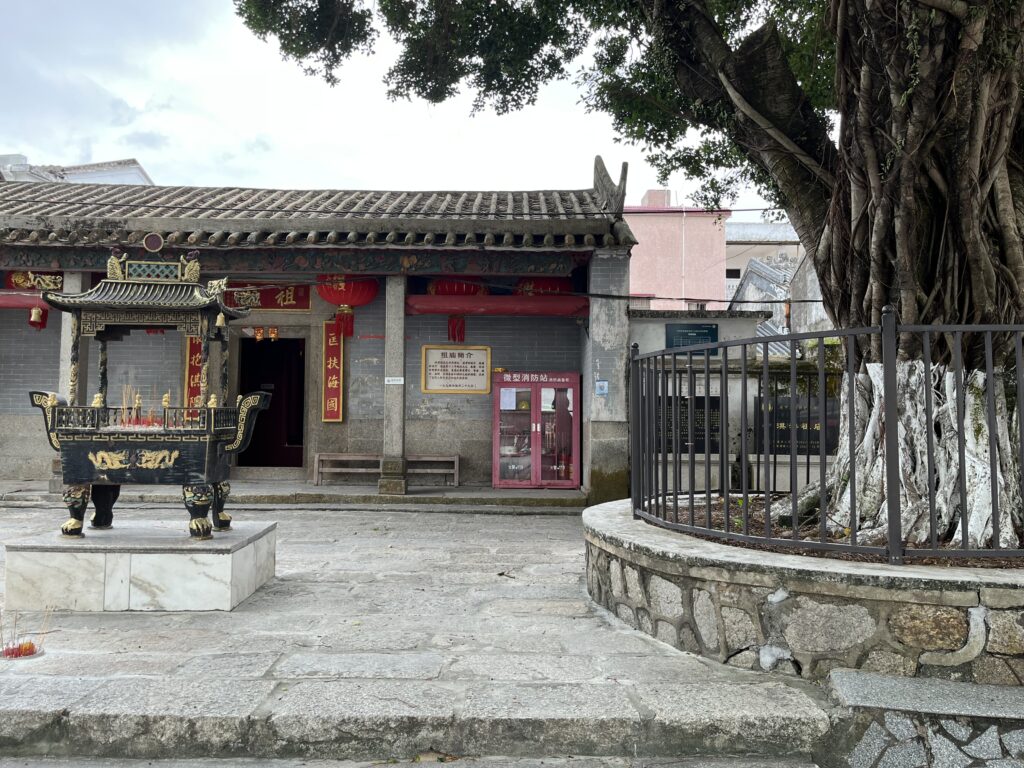
    Su Zhaozheng (1885–1929) was a prominent early Chinese labor movement leader and revolutionary figure. He was born on Qi’ao Island, and is one of the island’s most historically important figures.The exhibition hall is housed in a quaint traditional residence within the village, blending architectural styles of Cantonese and Hakka influences. With its blue bricks, dark tiles, carved beams, and painted rafters, it showcases the unique charm of Lingnan’s traditional dwellings. The interior of the exhibition hall features a diverse collection, including a wealth of historical photographs, physical artifacts, documentary manuscripts, and multimedia displays. These elements comprehensively recreate the life and revolutionary journey of Mr. Su Zhaozheng.
  • Baishi Street:
    Baishi Street, located on Qi’ao Island, is a granite-paved street approximately 2 kilometers long. It was constructed in 1833 using 3,000 taels of silver paid as compensation by British colonists after their military defeat. The street retains the original charm of a fishing village, with bluestone pavements complementing residential buildings featuring blue doors and green walls. Wall decorations include elements such as graffiti art and wood-carved inscriptions. Along the street, visitors can find creative businesses like handicraft shops and cafes.
    As an open-access attraction, Baishi Street is free to the public all day, with a recommended visit duration of about one hour. Nearby ecological tourism resources include the Mangrove Nature Reserve and Lingge Park.

When to visit: The best time to visit Qi’ao Island is from October to December for pleasant temperatures: 20–27°C; low humidity and less rainfall; clear skies — perfect for biking, hiking, and visiting historical villages and not too crowded compared to summer. For bird lovers, this is also the best time for bird-watching.

How to get there: 

  • By train: Zhuhai is well connected by trains. Get off at Tangjiawan Train Station of Zhuhai, then take taxi or DiDi, it’s about 20–35 minutes depending on traffic, cost around ¥35–¥60 and you’ll be dropped directly at Qi’ao Village, which sits near the island’s central area and attractions.
  • By bus: Bus Route 86, runs from Tangjiawan → Qi’ao Village, bus fare: ¥1–¥3, but expect around 30 minutes of wait time.

Where to stay: Qi’ao Island is easily a one-day trip from Zhuhai, and can be a weekend trip from cities like Guangzhou, Shenzhen and Hongkong. There are a few places to stay on Qi’ao Island. Because it’s still fairly rural and low-key, most accommodations are small guesthouses or homestays rather than big hotels. Check here for accommodations.

Elora

Elora, The Most Beautiful Village in Ontario, Canada

Perched on the edge of a spectacular gorge and nestled along the banks of the Grand & Irvine Rivers lies the enchanting village of Elora, Ontario. Elora strikes a perfect balance between its charming downtown and the stunning nature that surrounds it. While many visitors come for the famous quarry and gorge, they often stay to enjoy the unique shops, historic architecture, and inviting restaurants. Located just 1 hour and 20 minutes from Toronto, Elora is often hailed as the most beautiful village in Ontario. If you’re traveling through Ontario, Canada, we highly recommend making time to experience this picturesque destination.

Highlight of the trip:

  • Downtown Elora Walk: There are fascinating walks around the gorge and the village starting at the Elora Mill and ending at The Jack R MacDonald Bridge. Our favorite spots in Elora Village:  The Elora Mill, The Elora Mews (a stone courtyard, located right across from the Jack R. MacDonald Bridge), Elora Downtown Shops (along the river banks), Historic Dalby House (143 Metcalfe St.), The Mermaid Store (105 Metcalfe St.), The Old McLean House (17 Henderson Street), Victoria Park and the lookout over the gorge, the iconic “Tooth of Time” waterfalls (this is the starting point of the famous “Elora Gorge”, best view from Victoria Park), The David Street bridge (At the end of the Elora’s Victoria Park). Have a coffee break or light lunch at Lost and Found Cafe.
  • Elora Gorge Conservation Area & Hiking: The Elora Gorge is one of the most visited attractions in the Elora area. It’s opening season is May 1–October 15, daily 8 a.m.–9 p.m. The day use fee applies. Activities include hiking, camping, fishing, River Tubing & Paddling and more. Enjoy a 3 km loop along the rugged gorge rim with safety barriers and lookout points offering breathtaking views. Trails are easy-to-moderate—about a 1.5-hour hike—perfect for most outdoor enthusiasts.
  • Elora Quarry Conservation Area: The Elora Quarry is a stunning large limestone quarry turned popular swimming hole and day-use spot encircled by sheer cliffs up to 12 metres (40 feet) high, a small sandy beach, and adjacent cedar forests. The quarry is only open between early June and Labour Day, when the area is open during the season you can book the tickets and view the prices here.

When to visit: Elora can be visited year-round, but if you are looking for outdoor activities, then a summer visit is your best bet, because both Elora Gorge Conservation Area and the Elora Quarry are only open seasonally. Elora also gets very pretty with the fall colors and is nicely decorated for Christmas.

How to get there: The most convenient way is by car, travel time is around one hour and half. If you arrive in Elora early in the morning, street parking is plenty. Also Parkbus offers seasonal day trips from Toronto to both the Elora Gorge and Elora Quarry with a stop in Elora village. These trips include transportation to and from the locations and admission to the Elora Gorge Conservation Area or the Elora Quarry. Details check here.

Where to stay: Elora is a super doable day trip from Toronto, but if you have the time and interest, you can extend the trip with a visit to the village of Fergus, a short 8 minute drive from Elora. Pamper yourself with a stay or treatment at the Elora Mill and Spa. 

The Village of St. Jacobs, Canada- A Day Trip from Toronto

Just over an hour’s drive from Toronto, the Village of St. Jacobs was established in 1852, just outside of Waterloo region, Ontario, along the Conestoga River. St. Jacobs is a small village, surrounded by picturesque countryside, it offers visitors a glimpse into rural life of Canada. With many shops, restaurants, a brewery and so much more, there is truly something unique for everyone in the Village of St. Jacobs.

Highlight of the trip:

  • Take a stroll through Historic St. Jacobs with a detailed map, or go with a Guided Walking Tour! Best season to take the stroll: May-October, time to allocate: an hour to 90 minutes.
  • The famous St. Jacobs Farmers’ Market: the largest year-round farmers’ market in Canada where they can purchase fresh locally-sourced produce and artisanal crafts. It’s particularly worth visiting during the summer when the outdoor Farmers’ Market is open, and various fruits and vegetables are on full display.
  • Market Road Antiques: just across the street from the famous St. Jacobs Farmers’ Market is a 20,000 square feet indoor antique mall. From quality furniture, glassware, art and books, jewelry, toys, clothing and more, you can easily spend a whole day browsing here.

How to get there:

The fast and easiest way is by driving. If driving is not possible, then take a Go train from Toronto to Waterloo. From Waterloo, you can take a train to St. Jacobs. Waterloo Central Railway is a heritage railway offering historic passenger train rides on the Waterloo Spur between Northfield Drive in Waterloo, the St. Jacobs Farmers’ Market, Village of St. Jacobs and Town of Elmira. Or you can take a bus to St. Jacobs from University of  Waterloo bus station for about 30 minutes.


Where to stay:

You don’t have to stay overnight if you just want to visit St. Jacobs, but spend a night or weekend to get the most out of your visit when you combine a tour of Waterloo University, a prestigious university in Canada.

Bukchon Hanok Village, South Korea

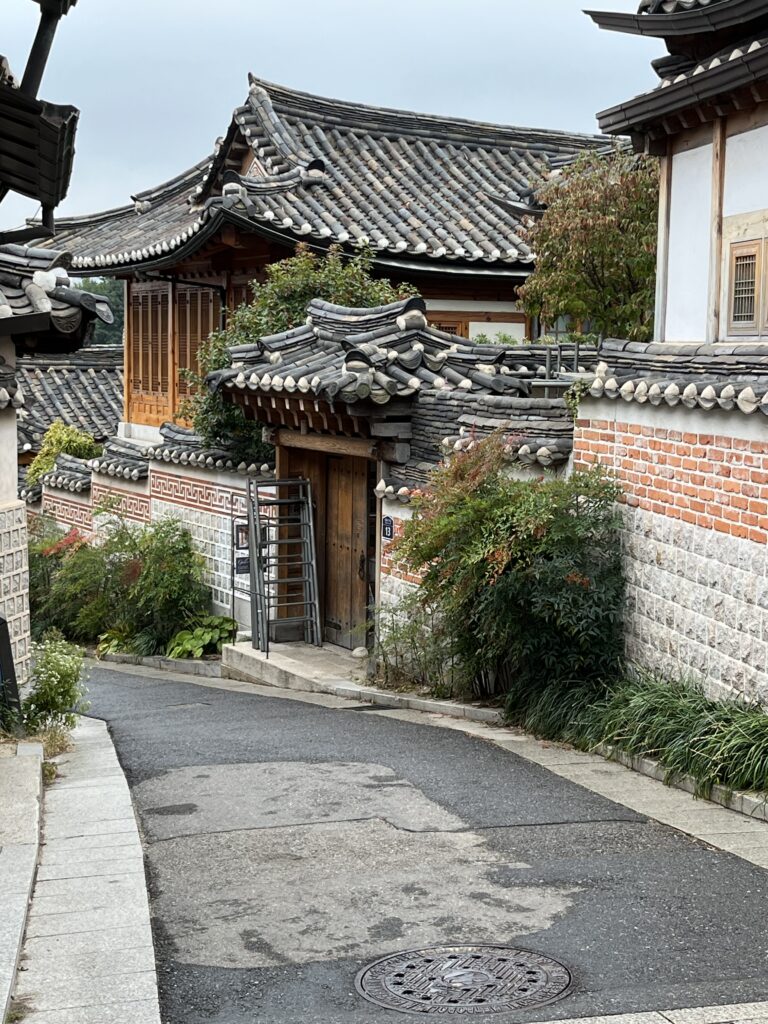
Bukchon Hanok Village is a historic neighborhood located in Seoul, South Korea. The village has been inhabited for centuries, and its traditional houses date back to the Joseon Dynasty (1392-1910). The area was historically a residential neighborhood for Seoul’s aristocracy and scholars, even today it still remains a residential area where people live and work. Bukchon village is renowned for its well-preserved traditional Korean houses, known as Hanoks, which offer a glimpse into the country’s architectural and cultural heritage. Walking through the narrow streets of Bukchon provides a contrast to the surrounding modern Seoul cityscapes.

Highlight of the trip: Have a break at the Bukchon Observatory and Tea House with the most scenic rooftop terrace. After you get lost strolling through the narrow streets, the crowds, and have had many memorable photos and selfies, this Tea House is the oasis you would much need. With a cup of traditional Korean tea in hand(hot or cold, many options, some flavours you may have never tasted before), head straight to the rooftop terrace. What a view – The Hanok village rooftops with Seoul cityscapes in the far background. At that moment, you would be amazed by the sight that a traditional village like Bukchon and a modern city like Seoul can coexist so naturally and so harmoniously, just beautiful!

How to get there: If you stay in an Insadong area hotel, you can walk to Bukchon Village, or subway to Anguk station and walk. I downloaded a  Korean app called NAVER (English version) for walking since Google Maps’s Walk function doesn’t work in Korea.

Where to stay: Amid Hotel Seoul. This hotel is within walking distance to Bukchon Village and minutes away from subways. I like that the hotel has a nice bakery/cafe in the lobby and a police station across the street(a plus for solo female travellers, also I have never seen a police station building that is so nice and modern).

Hallstatt Austria

Hallstatt Austria – A Day Trip from Salzburg

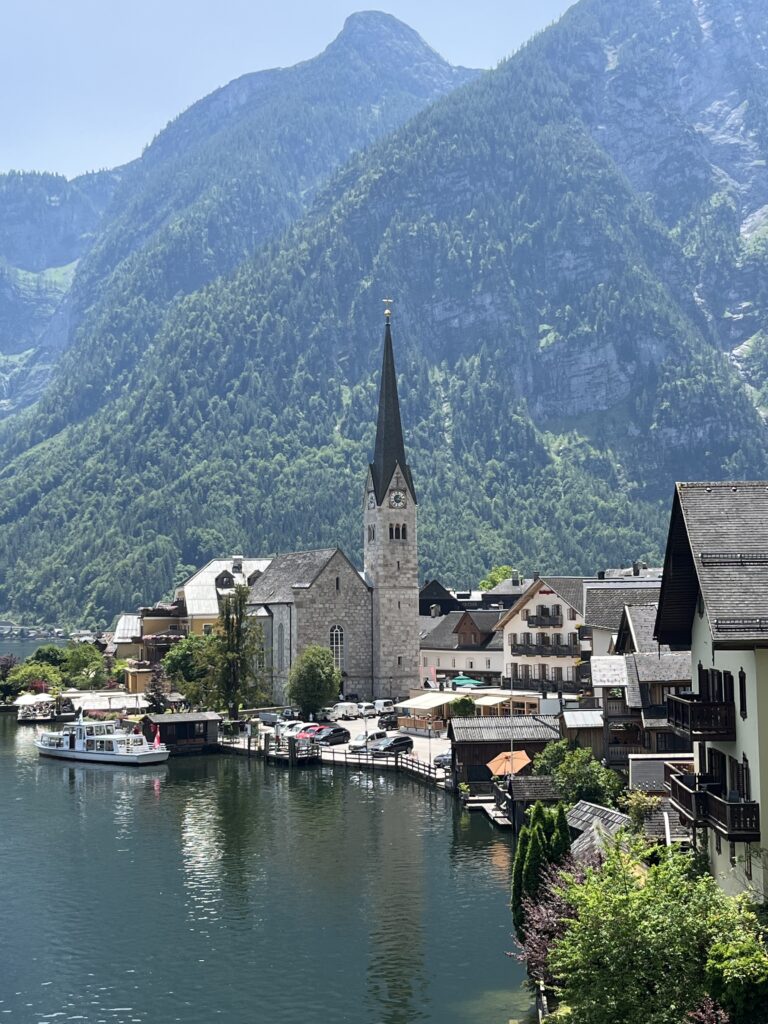
Hallstatt is a picturesque village nestled in the Austrian Alps, known for its stunning natural beauty and rich history. Located in the Salzkammergut region, Hallstatt is famous for its charming wooden houses, breathtaking mountain scenery, and its serene Hallstätter See (Lake Hallstatt). Hallstatt has been on my bucket list for a long time and finally my husband and I made the trip this year.

Highlight of the trip: Brunch by Lake Hallstatt is the mos t memorable part of the trip. We reached Hallstatt by 10am, beating most of the crowds. We found a wonderful restaurant called Braugasthof, they have lovely patio tables by the lake. Surrounded by the beautiful summer flowers, under the warm blue sky, watching sailing boats coming and going, white swans leisurely gliding on the serene lake, eating delicious dish Goulash and drinking local beer, it was just a perfect day! Oh, we also found the spot where the postcard photos of Hallstatt are taken. I used to think the iconic image of Hallstatt in those photos isn’t real, but in reality, it is as stunningly beautiful as the photos, if not more. I also took some photos myself, they look just like those postcards, mission accomplished!

How to get there: Bus 150 + train + boat to Hallstatt from Salzburg. The route may not be the most straightforward, but it is the most scenic one. Bus 150 to Bad Ischl, then you change to train to Hallstatt Station (your bus ticket also covers this). After you get off the train, a waiting ferry (we paid 7€ for the return ticket, cash) will take you across the lake. If you purchase a day ticket and have enough time, you can stop off at either Bad Ischl, Gosaul, or St Gilgen, a lovely way to experience the beauty of the Austrian countryside.

Tips: if you want to guarantee a seat on the bus, get on a bus at the Salzburg main bus station ( starting point). We got on at Mirabell Square ( the second stop), and the bus was almost full. 
 

Where to stay: Hotel am Mirabellplatz. This is our first time in Salzburg, so we want to base in the city and take a day trip to Hallstatt. I think we made the right decision. The hotel is across the Mirabell Palace & Garden, it was nice to have a stroll in the garden after the dinner. You can also catch a concert inside the magnificent Palace.